Solo Game Project
Moody Space Station
Atmospheric interactive experience built in Unity, with a custom posterization shader pipeline, 100% self-made assets, and a fully scripted emotional arc. Visual direction developed in Blender Cycles and translated into a realtime render pipeline from scratch.
About the Project
Built as part of a university brief that asked for an interactive experience based on a personal memory, expressed through environment and atmosphere rather than gameplay or programming. The memory I picked was the childhood dread of venturing into the basement boiler room to retrieve a screwdriver. I used that as the basis for a derelict sci-fi space station with horror-style lighting and atmosphere. The basement setting translated quite well.
The visual direction was developed by rendering the Unity scenes in Blender Cycles first as concept references, then translating that offline look into a custom realtime shader pipeline in Unity. That was one of the more technically involved parts of the whole project.
Why this project stands out
- Custom posterization shader built as a realtime render pipeline feature, with a dual-camera setup to selectively exclude UI. Took up to a week of the two-month project to get right.
- Visual direction derived from Blender Cycles concept renders and translated into Unity's realtime pipeline through research and iteration.
- 100% self-made assets - every model, material, and environment piece was built in Blender.
- Fully scripted atmospheric arc with roughly 20 timed and reactive events across the experience.
- Topped the class with the highest grade in the cohort, achieving 90% - above the threshold the department associates with publishable-quality work.
Key Spaces
Stairway
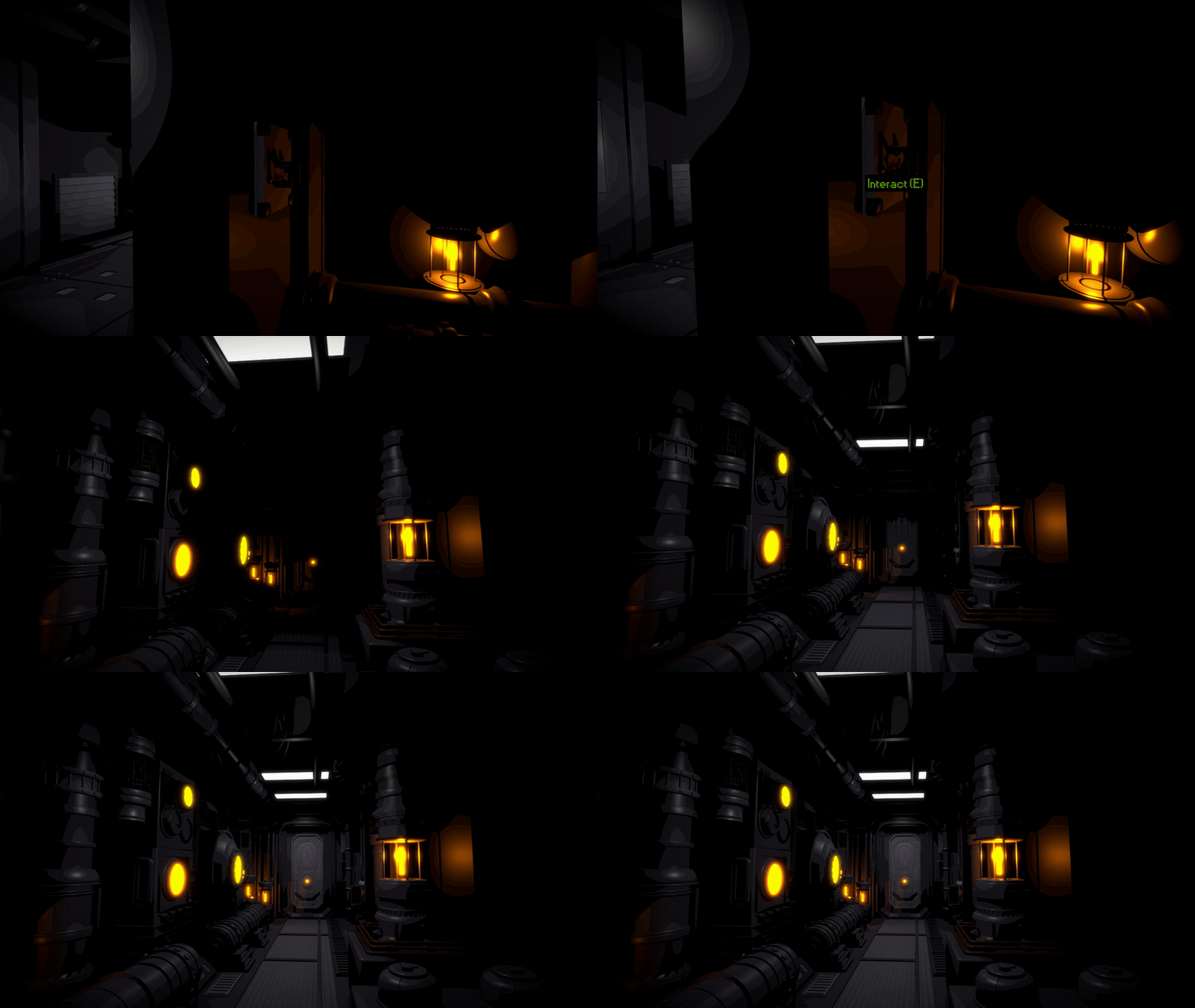
Hallway
Antechamber
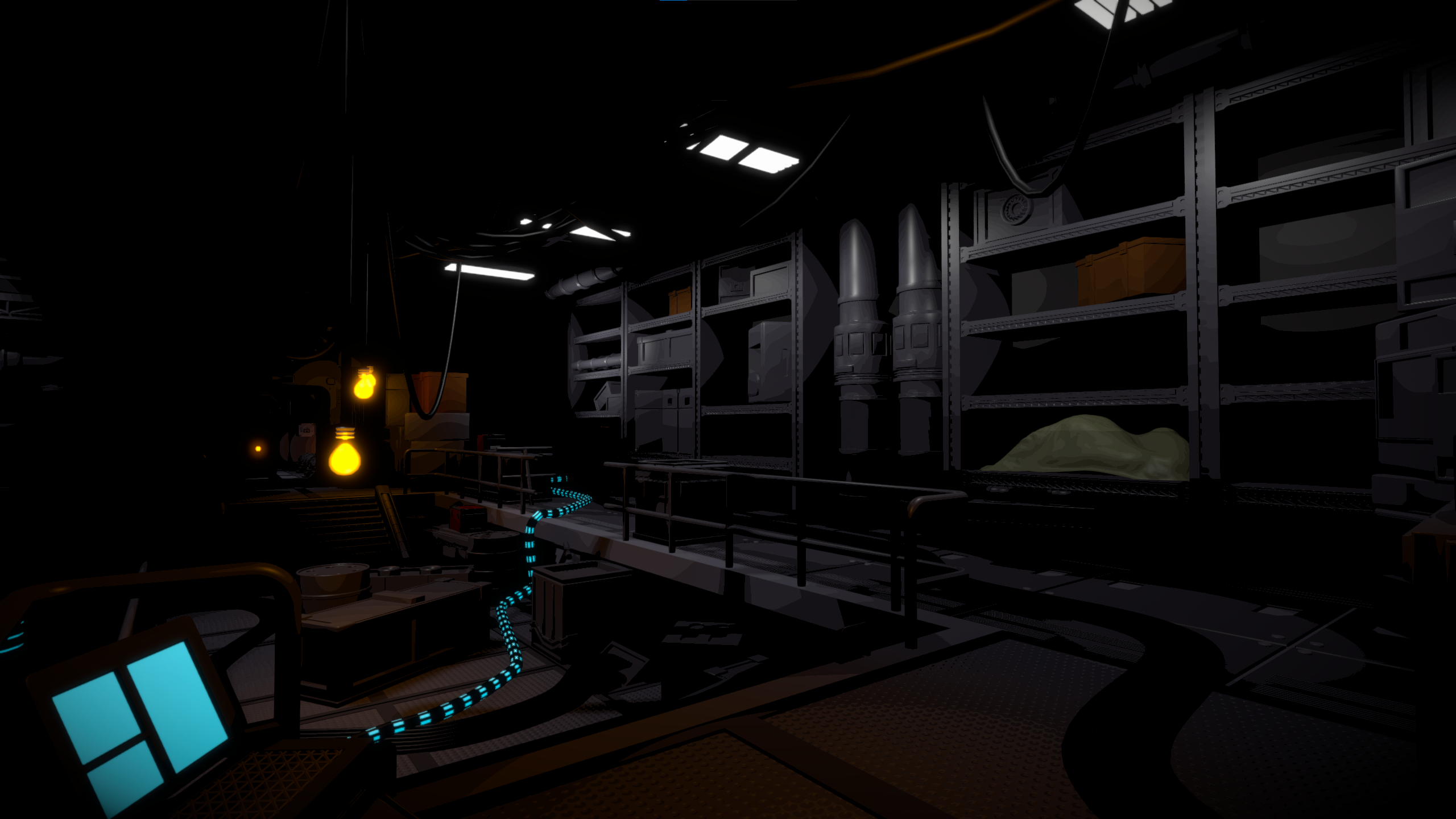
Final Room
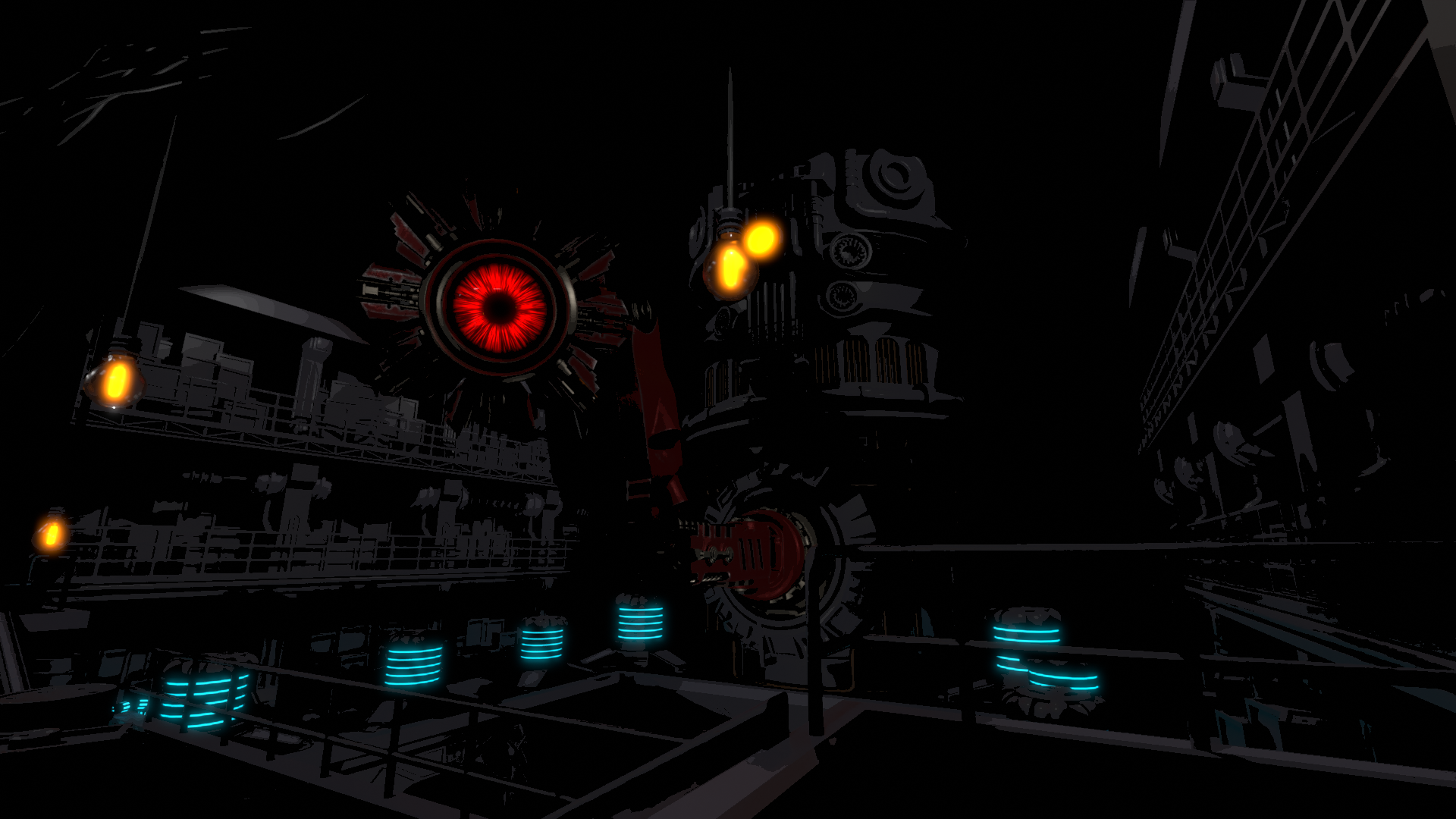
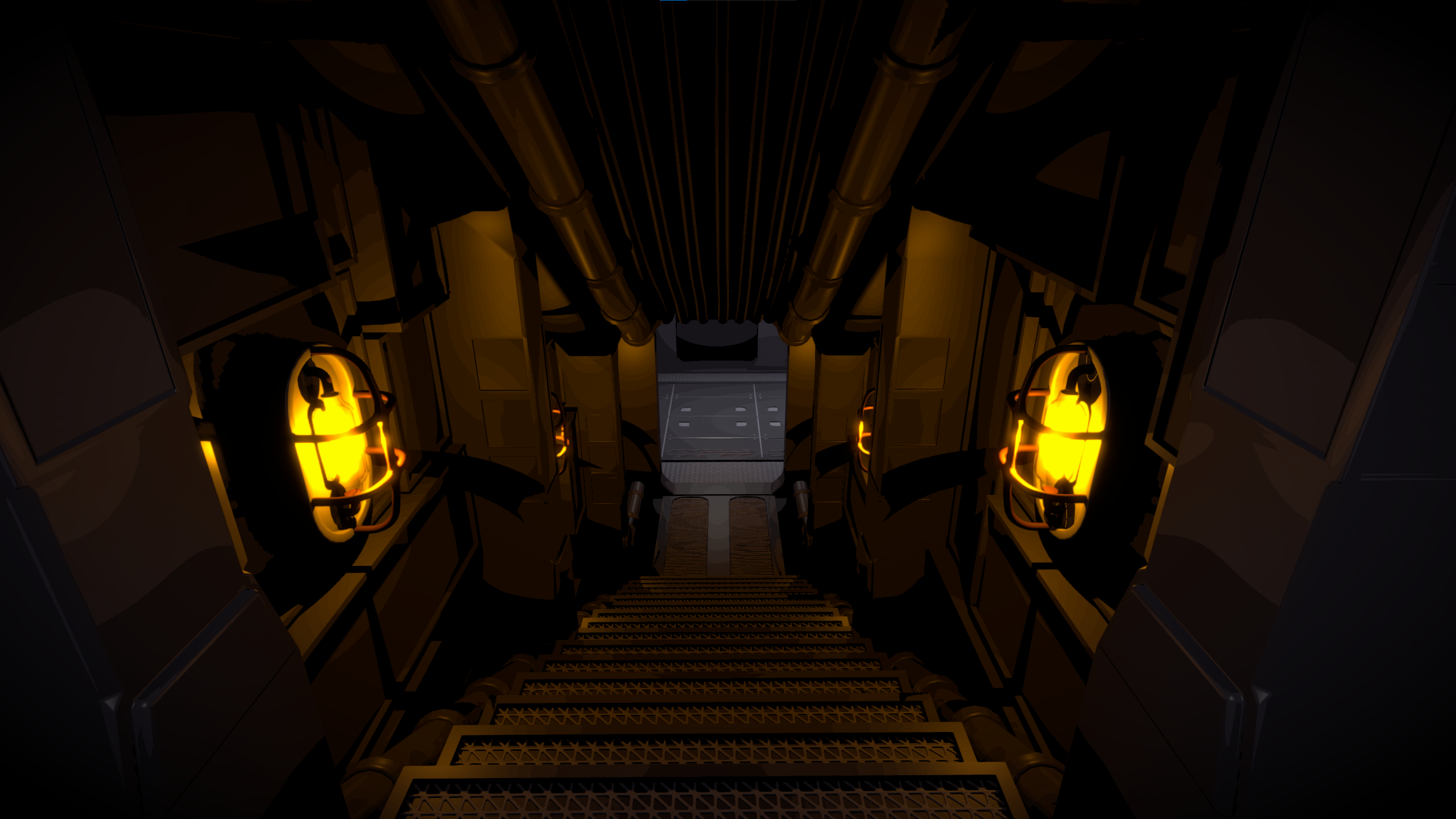
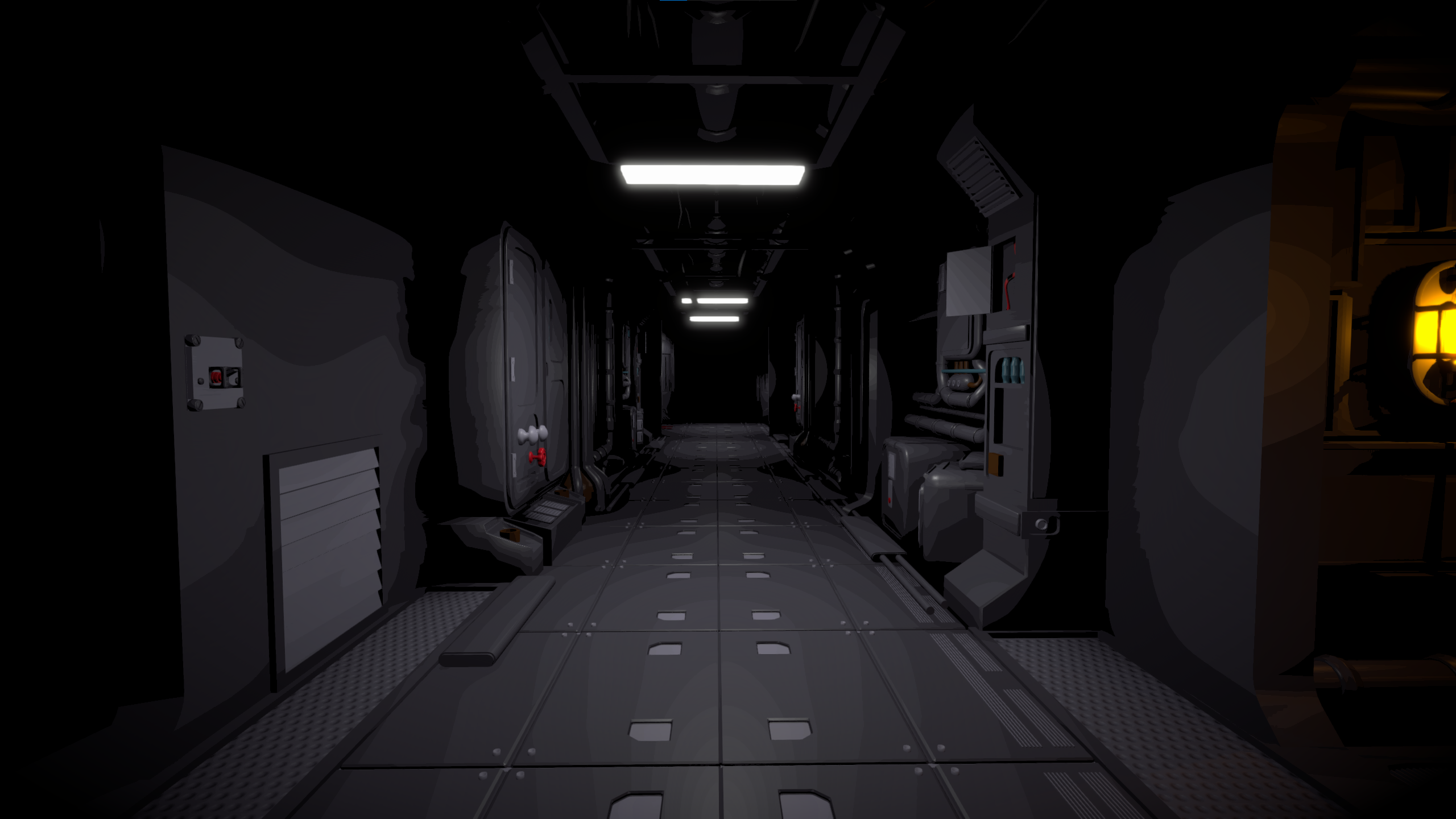
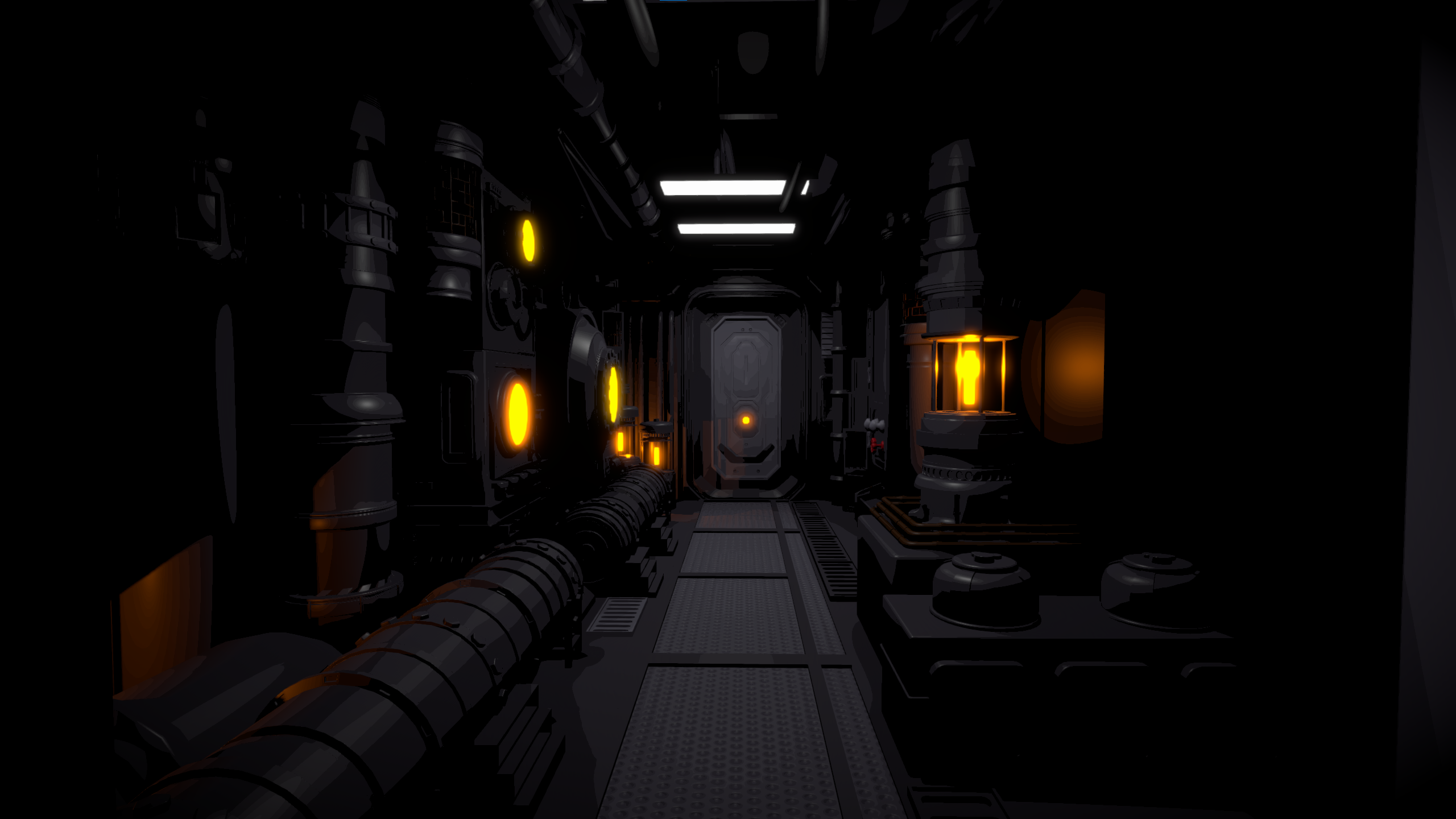
The visual style leans on contrast and geometry rather than texture detail. Materials are mostly flat colours, shadows are pitch black, and the environment is meant to feel overwhelming but indistinct - like your brain filling in a dark room rather than actually seeing it clearly.
Visual Direction and Shader Pipeline
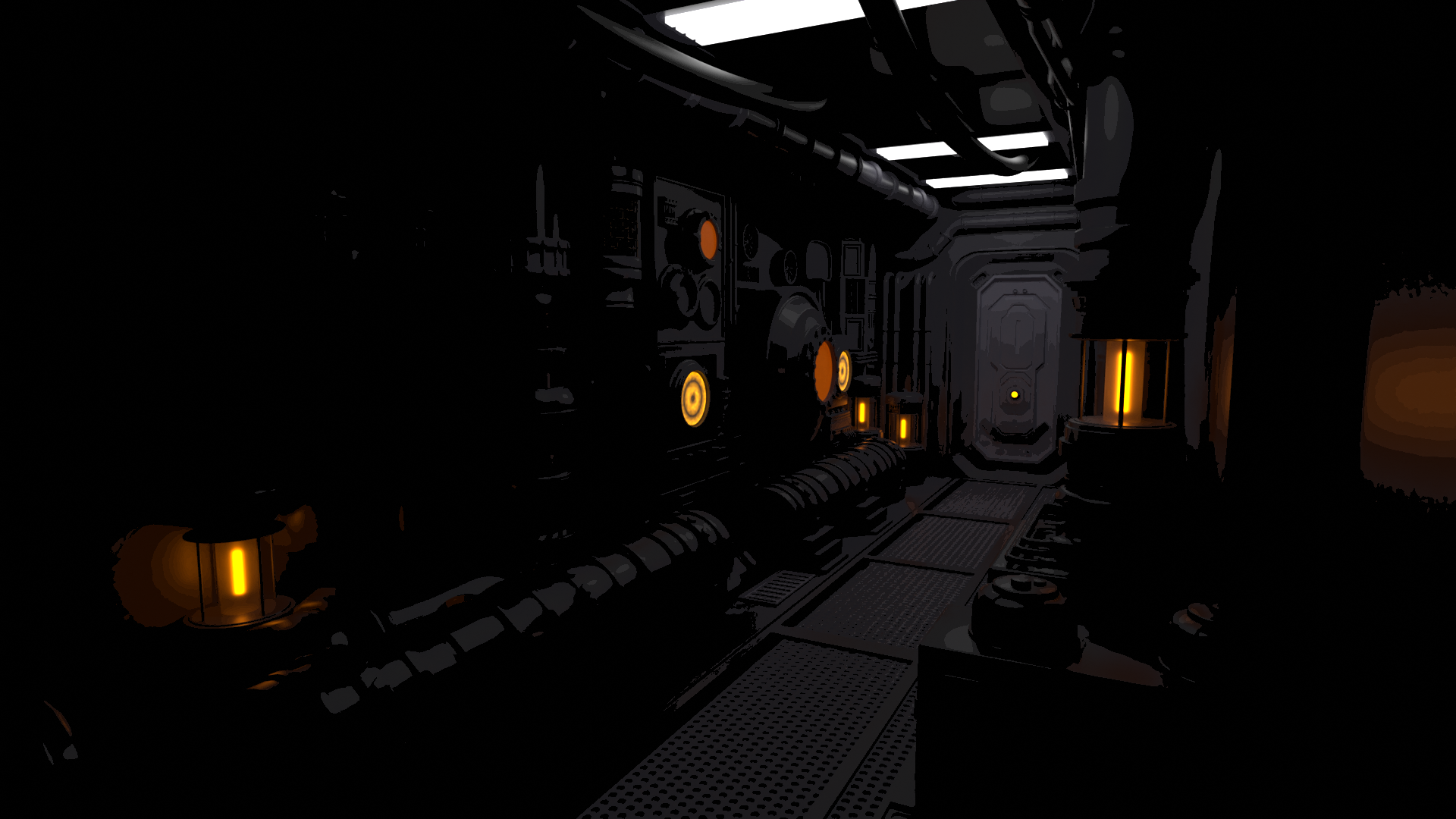
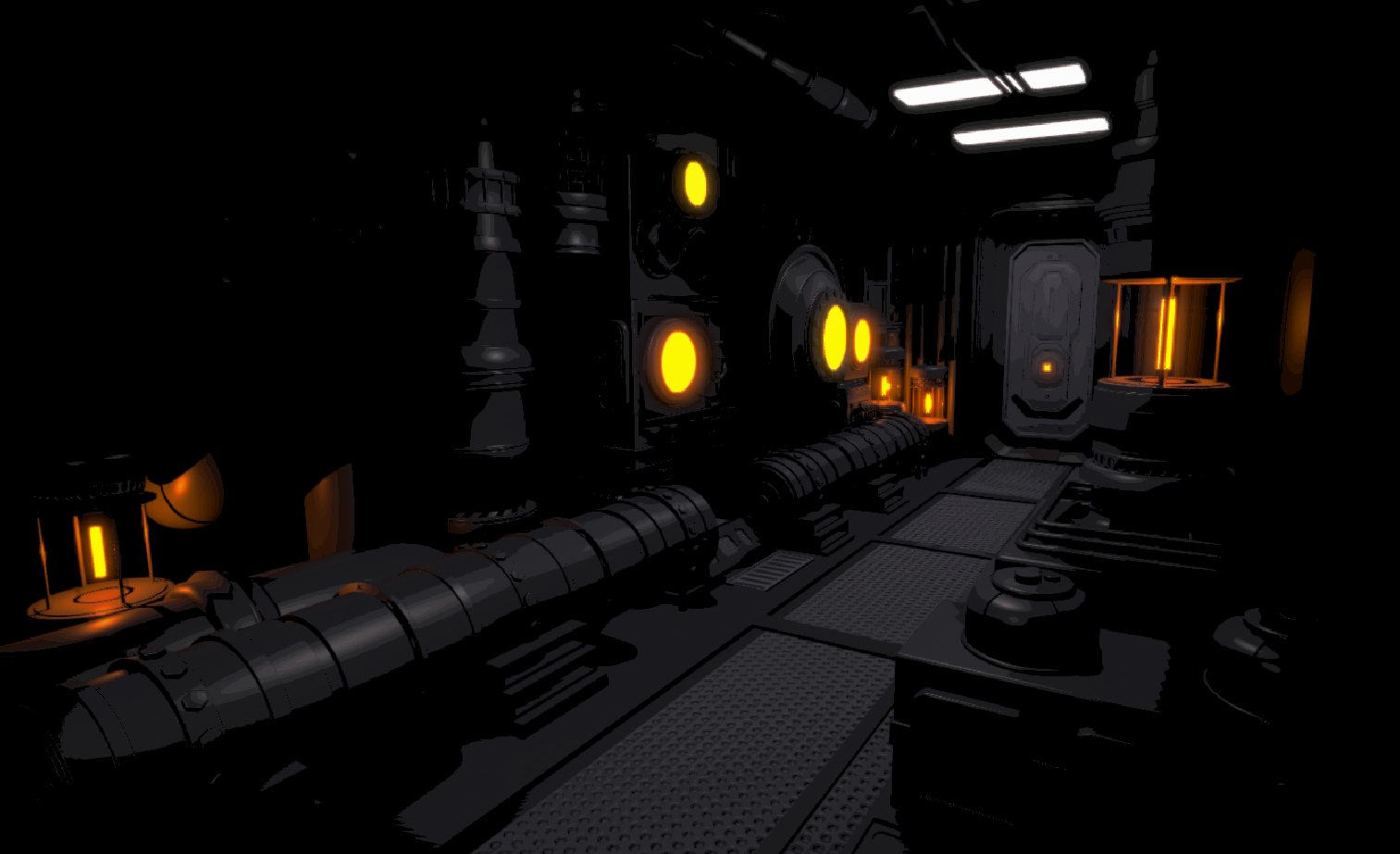
Blender Cycles to Unity
Before building the final scenes, I rendered early versions of the Unity geometry in Blender Cycles to use as a visual target. Translating that offline look into Unity meant figuring out what was actually producing each visual quality and rebuilding it within the engine's constraints.
Custom Posterization Shader
The most involved part was a custom posterization shader built as a node-graph effect and attached to the pipeline as a custom render feature. It reduces colour gradients into hard-edged bands. Getting this to apply to the scene without affecting the UI required a dual-camera setup - one renders the world through the shader, a second renders UI cleanly on top. The rest of the post-processing was handled through a standard Unity volume on top of that.
Atmospheric Arc
The experience has no conventional gameplay loop. It is built around roughly 20 timed and reactive scripted events that carry the player through a directed emotional arc - descending into the dark station, through to the centrepiece room and back out.
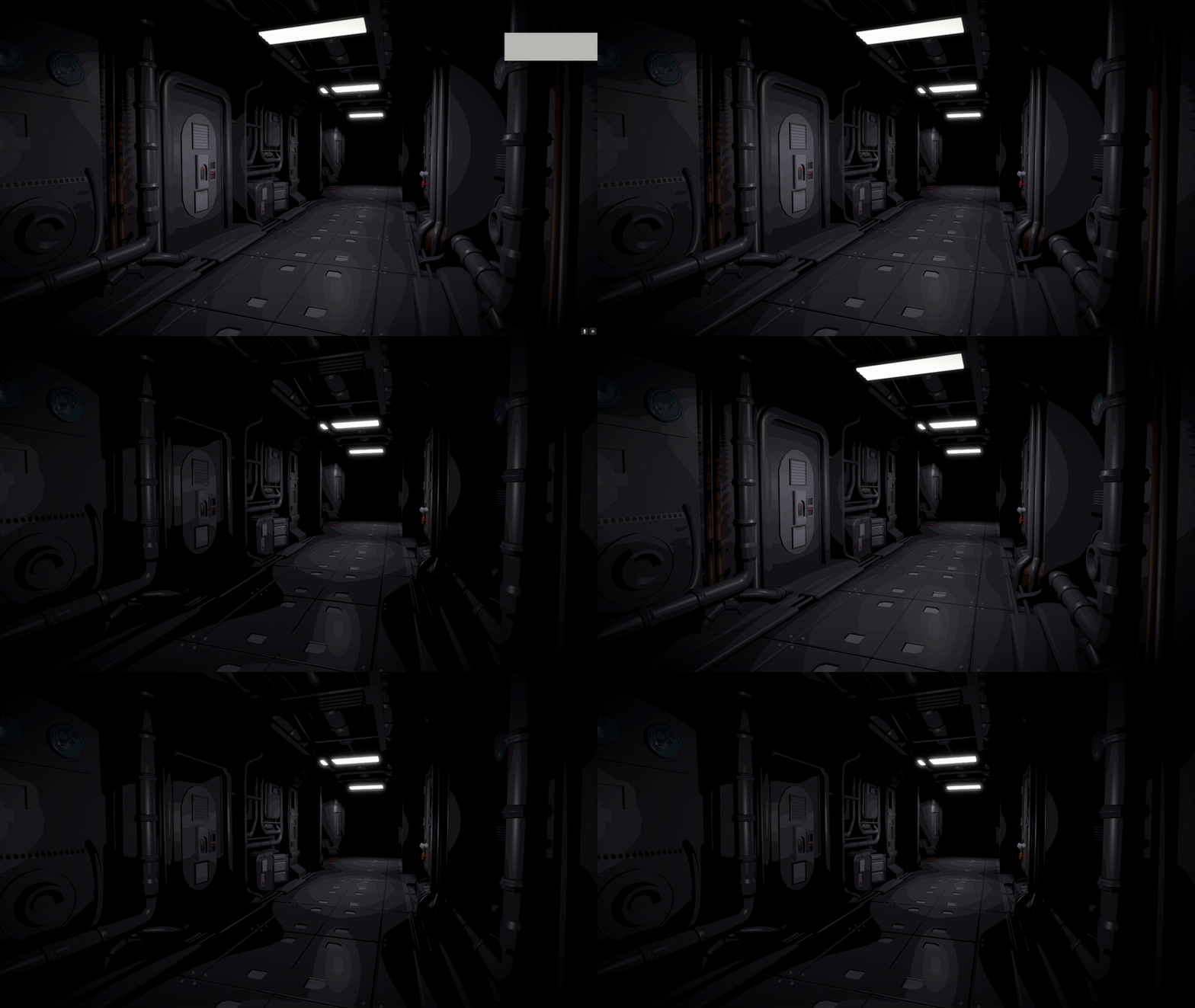
Entry
You descend flickering stairs into the station, pass through a claustrophobic hallway where a distant bang signals something ahead, and reach an antechamber where flipping a light switch triggers a row of warehouse lights coming on one by one with a heavy industrial sound.
The Centrepiece
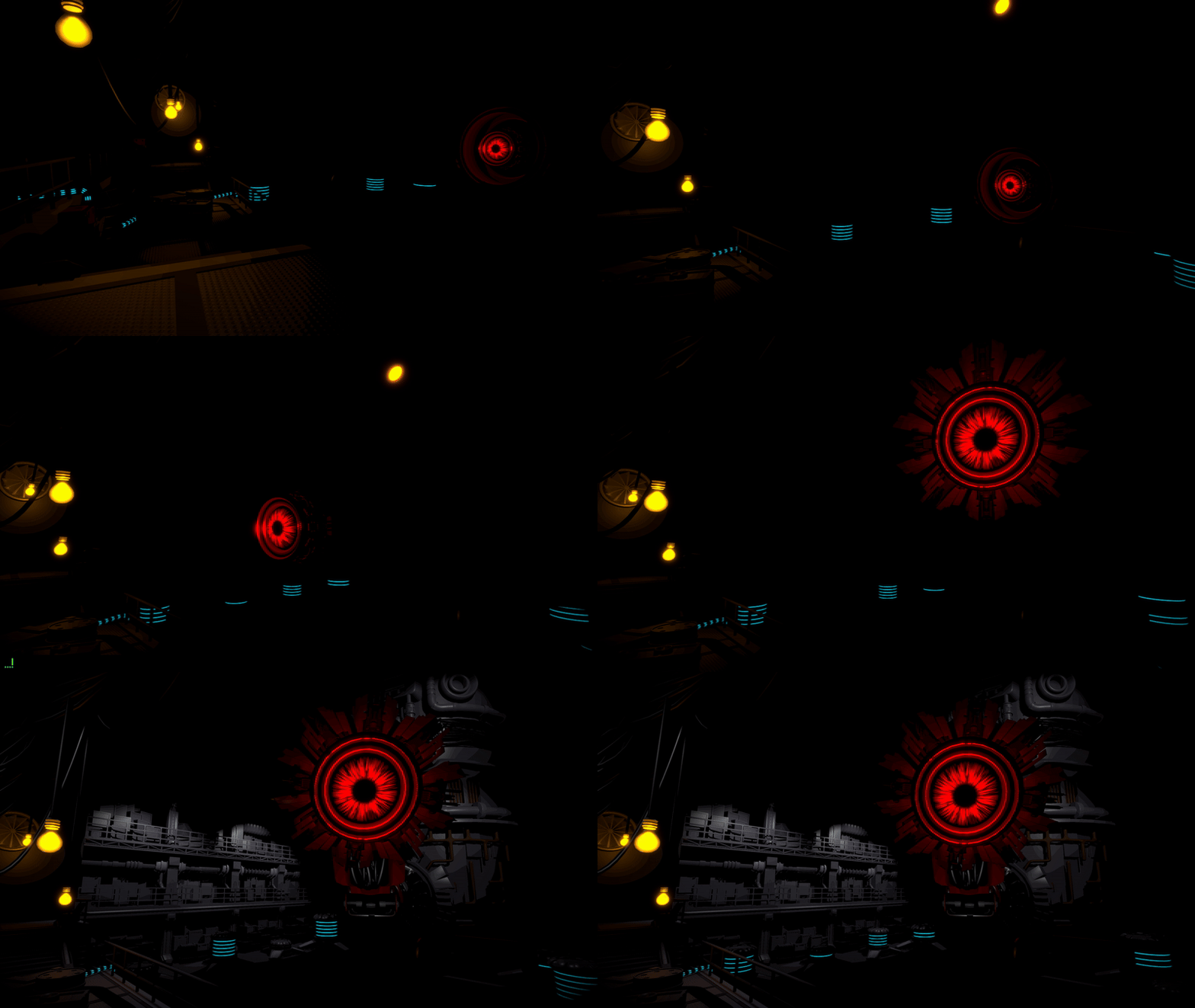
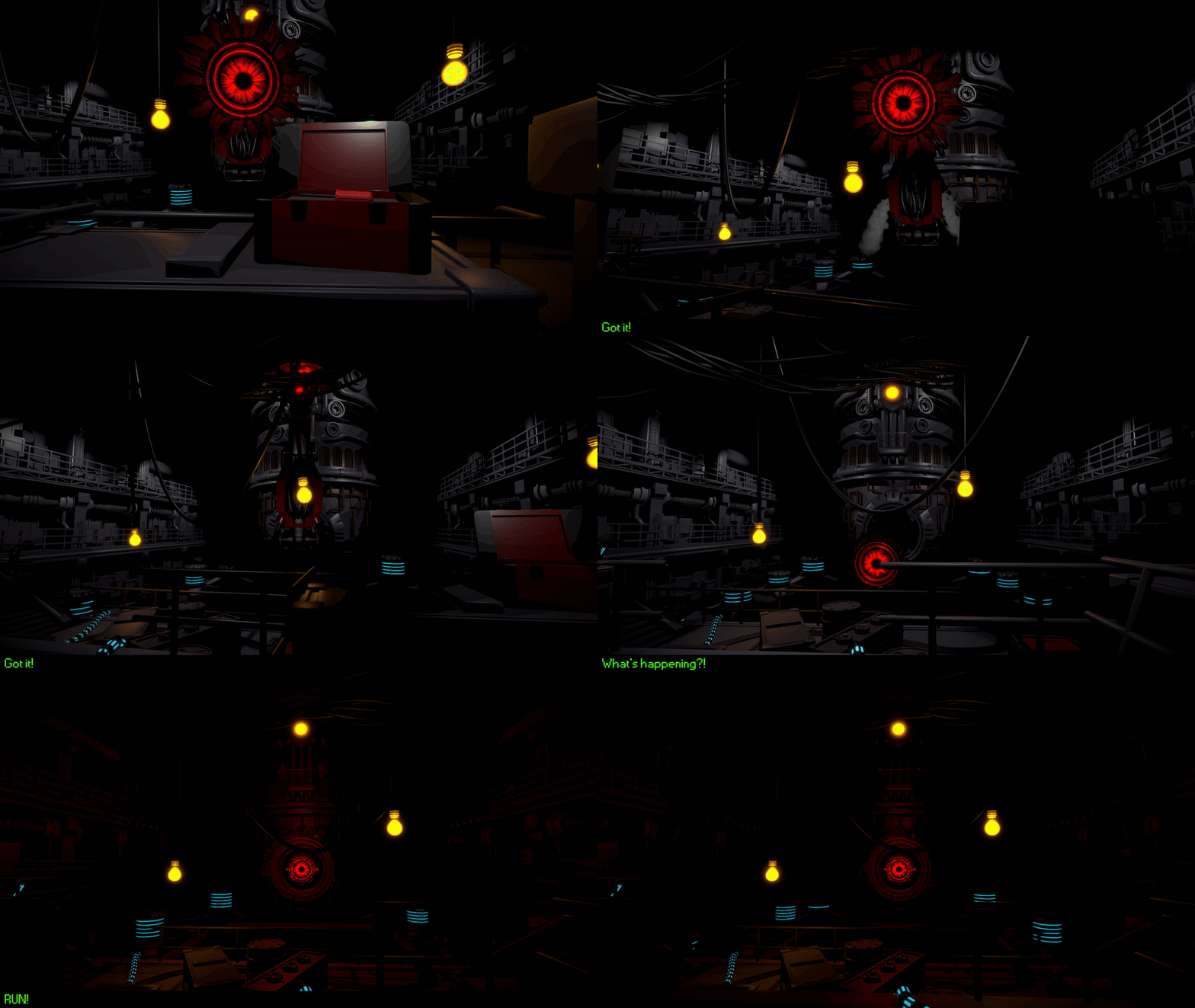
The main chamber holds a large sci-fi industrial column (the boiler reimagined). Once you cross a trigger threshold it activates: a robotic arm emerges, lights swing on their cables, the screen shakes, and loud machinery fills the space. The arm is fully rigged with a 12-bone armature and tracks the player through the room via a script rotating the relevant bones. Once you retrieve the screwdriver, the arm retracts and an alarm sounds.
Escape
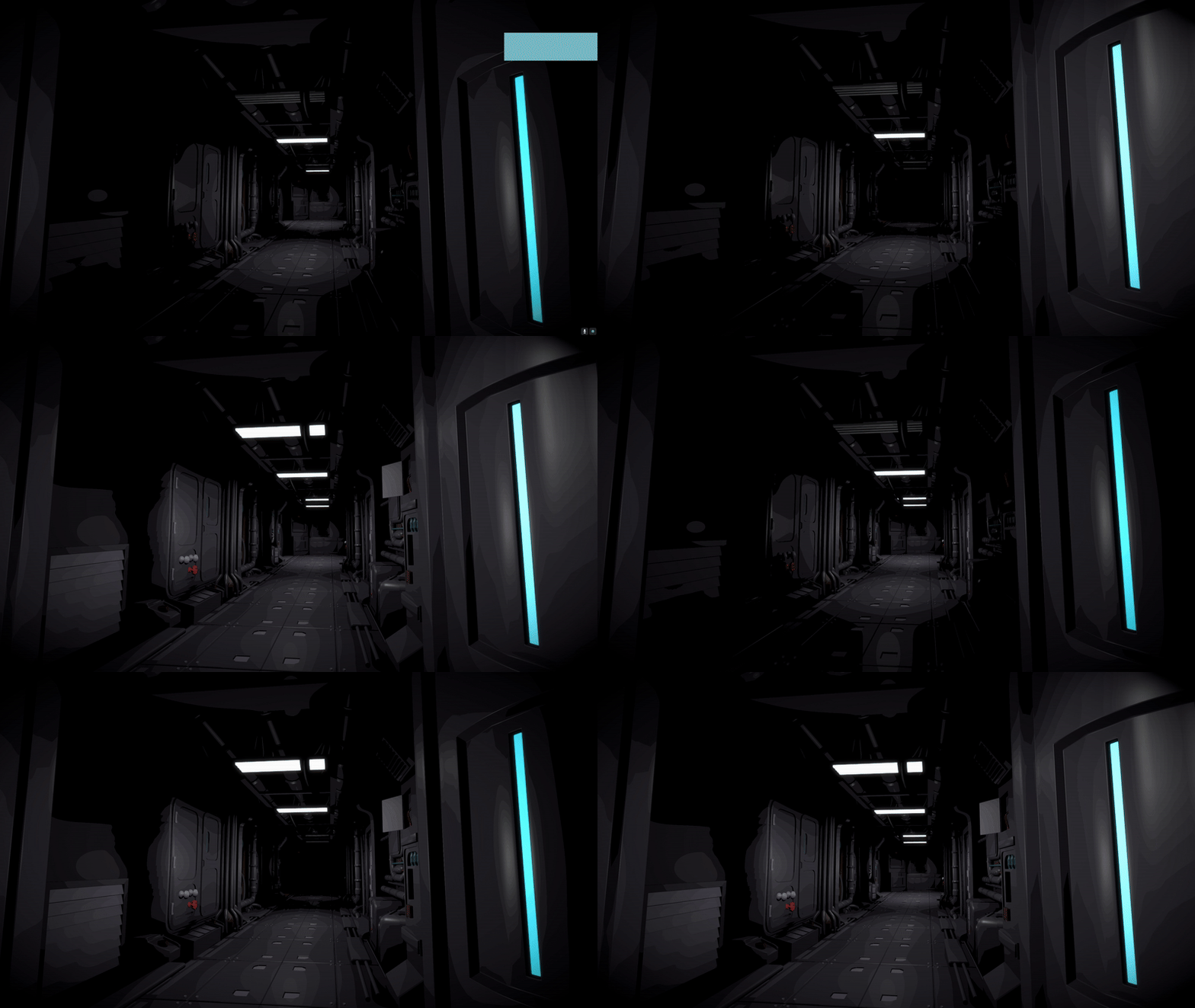
You work your way back through the station while steam bursts, more flickering, and additional screenshakes play out around you.
Solo Production Scope
- Environment modelling and scene assembly in Blender
- All scripted sequences, triggers, and reactive events
- Custom posterization shader and dual-camera pipeline
- Full creature rig and bone-tracking script
- Unity lighting setup and post-processing
- Soundscape integration
- Art direction and visual development pipeline
Gameplay Video
Full walkthrough without commentary.